Friday, March 30, 2012

Best Foundation Plants for Stellar Curb Appeal ... More Plants

Inkberry


(Ilex glabra) 'Compacta'
Look for slow-growing 'Compacta,' which has dark green leaves and a rounded shape, and grows to 4 feet high and 6 feet wide; Zones 5 to 9. 'Chamzin' will reach 3 feet high and 4 feet wide.


Japanese Yew

(Taxus cuspidata) 'Densa'
These are the shorter, slower-growing cultivars that are easiest to keep in check. Female 'Densa' has dark needles with red berries in winter. Can reach 4 feet high and 8 feet wide; USDA Hardiness Zones 4 to 8. Hybrid 'Wardii' is a slow grower that, in 20 years, can reach 6 feet high and 20 feet wide.


Deciduous Flowering Shrubs: Slender Deutzia

(Deutzia gracilis) 'Nikko'


Combine shrubs that bloom in early spring with those that continue to provide color into summer. Compact varieties stay neat in winter after their leaves have dropped.


Slender Deutzia is a mound of slender, flower-filled branches. 'Nikko' blooms in spring with white flowers and dark blue-green foliage. Can grow up to 2 feet high and 5 feet wide.


Smooth Hydrangea

(H. arborescens) Bella Anna


Place these showy, reliable bloomers under a window where you can enjoy them from inside. 'Annabelle' has white blooms in summer, while Bella Anna is covered in pink flowers until fall. Both grow up to 5 feet high and wide.


Japanese Dpirea

(Spiraea japonica) 'Anthony Waterer'


These long bloomers grow in upright mounds with pink or red flowers from late spring to early summer. 'Anthony Waterer' has pinkish-red blooms and can grow up to 4 feet high and 6 feet wide.


Wednesday, March 28, 2012

Best Foundation Plants for Stellar Curb Appeal

Evergreen Shrubs: Rhododendron

'Yaku Prince'


These bones of a foundation planting provide structure to the flowering specimens around them. Slow-growing, dwarf, or compact varieties are a smart choice, especially under windows.


Rhododendron is a favorite for showy spring flowers and glossy green leaves; shorter varieties require less maintenance pruning to stay in check. 'Yaku Prince' blooms with funnel-shaped pink flowers and grows to 3 feet high and wide with olive-green leaves; Zones 4 to 8. Azalea 'Delaware Valley White,' a subspecies, has tubular white flowers and gets about a foot bigger


Littleleaf Boxwood


(Buxus microphylla) 'Winter Gem'


Among the more compact boxwoods, 'Green Velvet' has pale green leaves and a mounding habit that can grow to 4 feet high and wide; zones 5 to 8. 'Winter Gem' reaches a similar size but with yellowish-green leaves.


Japanese Pieris


(Pieris japonica) 'Cavatine'


Dense habit with branches that reach to the ground. 'Cavatine' has leathery, dark green leaves with bell-like white flowers in spring. Can grow to 3 feet high and wide.


Tuesday, March 27, 2012

Best Foundation Plants for Stellar Curb Appeal / Part 2

Tallest in Back, Shortest in Front


Put another way, a successful foundation planting starts with picking the right plants in the right proportion: evergreens to provide the structural bones of the beds year-round, deciduous and flowering shrubs to add texture, and perennials of varying heights that yield long-lasting color. About 50 percent of the foundation bed's space should be evergreens, 25 percent deciduous and flowering shrubs, and 25 percent perennials. But even then, a good plant can be placed in a bad spot. When you see that beautiful, blooming rhododendron at the garden center in a 2-gallon pot, you have to consider how big it will get over time before you plant it a foot from your house. Plan for at least 1 foot of space between the house and any mature plant to allow room for maintenance. This pushes the bed farther from the house, which is what most designers want, with front-of-the-house beds 6 to 8 feet deep. "This helps improve the view from inside, too," says Walters.


Lastly, designers agree that a restricted color palette helps give foundation plantings a considered, cohesive look. Too many colors distract the eye. When in doubt, use more plants with the same color or bloom instead of adding additional colors.


Shown: Spring-blooming shrubs brighten this scheme,

tall rhododendrons are placed nearest the house, shorter azaleas in front, with perennials and bulbs staggered in the foreground. For summer-to-fall interest, Hosta and Catmint start to stretch out as daffodils begin to fade.

Monday, March 26, 2012

Best Foundation Plants for Stellar Curb Appeal

There is something unsettlingly stark about the intersection where house meets land—it begs to be softened with greenery. But just hiding that juncture with a tight fringe of evergreens isn't the answer. Neither is a one-scheme-fits-all formula. Two conical things on either side of the front door with two tall things on either end of the house with lower things in the middle—that's a dated approach. The right foundation planting for most houses is a nice mix of evergreen and deciduous material, with dwarf varieties in order to keep window views open, some repetition of plants for a unified look, and an overall casual, naturalistic feeling.


Shown: Curved, asymmetrical beds hide open space under the porch and provide color and interest with a mix of flowering and evergreen plants. A mophead hydrangea greets visitors at the stairway with big orbs of color in the summer, while a blue juniper and a fine-leaved azalea anchor the bed in every season. Hanging baskets with trailing ivy soften the porch posts and frame the entry. Red flowers in the baskets echo the foundation planting's blooms.

Friday, March 23, 2012

Take the Work Out of Yard Work


You can reduce the time and money spent maintaining your lawn with simple acts, such as cutting your lawn at the appropriate height and using slow-release fertilizers. You can also realize large savings by changing your opinion about what constitutes a beautiful lawn. Clover, for example, is not an undesirable. A sprinkling of violets is quite beautiful. It is natural in mid-summer periods for your grass to turn temporarily brown. Remember, early lawns were inspired by grassy openings in the forest, not by golf courses or pictures in magazines.


Fertilizer Guidelines


North and South


The optimal time to apply fertilizers is when the grass roots and blades are actively growing. Apply fast-release fertilizers at a rate of 1 pound of nitrogen per 1,000 square feet. Slow-release fertilizers usually require a higher rate of application. Follow the manufacturer’s instructions; check the calibration of your spreader, as well as the square footage of your lawn, to ensure that you are applying the right amount. Remember, more is not necessarily better with fertilizers, applying too much may “burn” your lawn and promote thatch formation, disease, and insect infestation.


Keep in mind that well-watered lawns or those subject to heavy rainfall will require more nitrogen. Sandy soils are more prone to leach nutrients, but using water-insoluble fertilizers will help nutrients remain in the soil longer. Grass clippings left on the lawn over the course of a year will add about 1 pound of nitrogen per 1,000 square feet, so you can plan accordingly. The basic guidelines of fertilizing include:


Test soil to determine grade and amount of fertilizer to use.
Apply no more than 1-pound of fast-release nitrogen per 1,000-square feet in a single application.
Use slow-release nitrogen whenever possible, especially on sandy soils.
Use only the amount called for based on your lawn’s square footage.
Use a rotary spreader to apply quickly and evenly, and to avoid a striped pattern in the grass.
Spread the fertilizer in two directions for each application.
Apply fertilizer to dry grass, and water well immediately afterward.
Sweep up any fertilizer spilled on paved areas and save for later use.


Do not use leftover lawn fertilizer on trees, shrubs, annuals, or perennials. Too much nitrogen on these plants stimulates stem and leaf growth, decreases flower and fruit production, and sends an open invitation to chewing and sucking insects that feed on the nitrogen-rich foliage.


North


Growth season occurs during the early to mid fall, when weed competition is minimal, and fertilizing produces healthy roots. This timing also allows plants to build up on needed carbohydrate stores with just a moderate amount of top-growth. You should divide the annual amount of fertilizer and apply two-thirds in early fall and the remainder in mid to late spring, after the lawn’s initial green-up. For low-maintenance lawns, apply 2 pounds of nitrogen per 1,000 square feet. This may require an adjustment, given your specific growing environment, soil test results, the lawn’s condition, and the type of fertilizer you use. For example, Kentucky bluegrass and Perennial ryegrasses require more fertilizer than the fescues.


South


Southern lawns have a larger blade size, grow more vigorously, and need at least two applications of fertilizer each year. Do the first application about three weeks after the initial spring green-up; then fertilize again in late summer. Wait until warm-season grass becomes dormant before fertilizing areas overseeded for winter color. You can add supplemental quick-release nitrogen in between if there is weak growth and poor color. For low-maintenance lawns, apply 2 to 4 pounds per square foot. This may require adjustment depending on your specific growing environment, soil test results, the lawn’s condition, and whether you use a slow or fast-release type of fertilizer. For example, Bermudagrass, Zoysiagrass, and St. Augustinegrass need more fertilizer than Bahiagrass, Centipedegrass, or Carpetgrass.


Nitrogen Fertilizers


The nitrogen fertilizers listed below are commonly available at nurseries and garden centers:


Fast-Release

Ammonium nitrate
Ammonium phosphate
Ammonium sulfate
Calcium nitrate
Urea

Slow-Release


Activated sludge
Alfalfa meal
Bone meal
Composted manure
Dried poultry waste
IBDU (isobutylidene diurea)
Methylene urea
Soybean meal
Sulfur-coated urea
Ureaformaldehyde

Thursday, March 22, 2012

Aerating the Lawn in Preparation for Spring


Early March is a great time to think about scheduling your lawn aerating service for spring. Over the previous summer, the lawn will have been subjected to a lot of traffic, causing compaction. Soil compaction leads to a variety of other problems, if not alleviated, so it is best to alleviate compaction as early as possible in the year. Aerating will also take care of any thatch buildup problem your lawn might be suffering from. A little bit of thatch is fine. Too much thatch can lead to many of the same problems that soil compaction causes.


Why Spring for Aerating the Lawn?


Lawn aerating is helpful for the health of the grass, but it is also stressful because it disrupts the roots and the regular growing habit of the grass plant. Aerating in the spring, when the lawn is actively growing, gives the lawn a chance to recover more quickly than aerating during the summer or late fall when the lawn is not growing as quickly. If you didn't get a chance to aerate the lawn in the fall, the spring is, obviously, the next best choice! The spaces opened up by aeration will allow you to keep your lawn healthy all summer long. Air, water and fertilizer will penetrate the soil more easily after aeration, ensuring an overall healthier lawn.


Prevent these Problems with Spring Aeration


Aerating can help correct certain problems in the lawn, and avoid others. Take care of this garden task in the spring to avoid these problems:

Fungal diseases. Aeration won't completely eliminate these problems, but better air and water movement in the soil will reduce them.


Thatch buildup. An inch or so of thatch is ok. More than that, and you provide a home for fungal, bacterial and insect pests.


Weeds. Weeds sprout when lawn grass is unhealthy and unable to out-grow or out-compete the weeds. Overall improvement in health of the grass will keep weed problems to a minimum.


Steps for Successful Lawn Aerating


First, mow your lawn to about ½ of the normal mowing height. For example, if you usually mow your lawn to a height of three inches, set the deck at 1 ½ inches.


Give the lawn at least one inch of water a couple of days in a row, a couple of days before you aerate.


Aerate using a punch-core aerator. These actually remove little cores of soil.


After aeration, water to break up the cores of soil.


Top dress with a light layer of compost or lightweight topsoil.


Keep the lawn watered well-at least one inch a week-until it starts to fill in. Aerating is both helpful and stressful for the lawn, so good care after aeration is important.


You can RENT an aerator from IMPERIAL SERVICES to complete your lawn aerating. It should be a priority at least once a year.

Tuesday, March 20, 2012

Beauty Is Waiting In The Wings: Attracting Birds And Butterflies


(NAPSI)—Birds and butterflies add color and excitement to a garden that can’t be found from any other source. And their contributions are much more than aesthetic: Birds help control insects and slugs; while butterflies are important pollinators. Almost anywhere a plant grows will get an occasional visit from these attractive and beneficial creatures. Making your yard a welcoming oasis for them can be as simple as choosing the right plants.


Inviting Butterflies


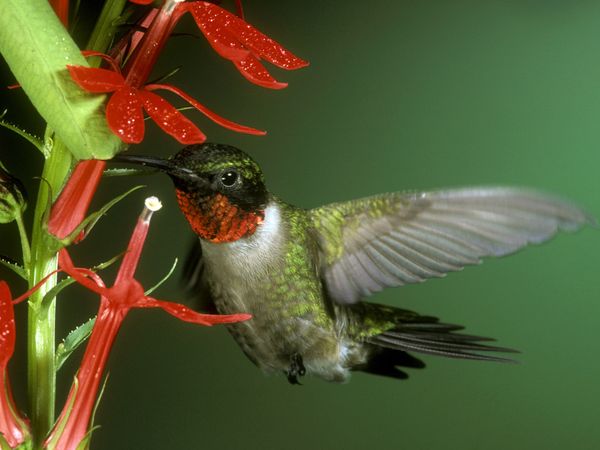
Butterflies and hummingbirds feed primarily on nectar, a sugary liquid produced inside flowers. Certain plants are exceptional sources of nectar, such as the aptly named butterfly bush (Buddleia), which is a favorite of hummingbirds as well.

Though these shrubs have long been popular, newly introduced varieties offer major improvements. For example, a Miss Molly butterfly bush has intense dark magenta flowers on a compact 4˜−5’ (1.2−1.5m) plant. If space is an issue, you may care to try the Lo and Behold series of butterfly bushes. These shrubs pack all the flower power and attractive silver foliage of their larger kin but in a neat, compact package: Blue Chip is just 24−30” (60−72cm) tall.

White butterfly bushes, such as Ice Chip, make an excellent choice for busy people who can only enjoy their gardens at night. The light-colored flowers appear to shine in the dark and at just 18−24” (45−60 cm) tall, it can be planted in a large pot or as an edging around a deck or patio.


Attracting Songbirds


Numerous species of much-loved songbirds, such as cardinals, cedar waxwings and bluebirds, rely on berries for food. Fortunately, several easy-to-grow landscape plants provide fruit for the birds and beauty for the gardener.

Winterberry holly, a native shrub, is an especially nice choice. Unlike other hollies, it loses its leaves in autumn, making the berry-laden stems extra showy. Some varieties are especially fruitful, such as Berry Heavy, while others are selected for exceptionally bright color, such as Berry Nice. Birds prefer the fruit of winterberry holly when it’s ripe and soft; consequently, the ornamental display remains until mid-winter.


Birds, Butterflies

and Lady Bugs


Certain plants are veritable bird- and butterfly-attracting powerhouses, providing both nectar-rich flowers and edible berries. Black Lace elderberry, for example, blooms in early summer with large clusters of pink flowers favored by a host of beneficial insects including lacewings and ladybugs. Once they have pollinated the plant, the resulting fruit is relished by a number of bird species; human garden visitors are equally fond of this shrub with its lacy dark purple leaves and attractive habit. It adapts readily to growing in a container, making it especially suitable for nature lovers with limited space.

Viburnum is another excellent option that provides nectar and fruit. There are many varieties available, but for maximum wildlife benefit, select one that bears abundant crops of fruit, such as the Blue Muffin with its dark blue berries, or Cardinal Candy with clusters of shiny red berries.

Shrubs provide excellent habitat for birds, as their much-branched interiors make lots of perches for building a nest and their foliage ensures good coverage to hide from predators. However, to keep the welcome mat out year-round, it is important to include some evergreen plants in every garden.

Varieties such as Soft Serve false cypress add graceful structure and rich color while providing a safe resting spot for feathered visitors, a service they’re sure to appreciate between the meals you’ve thoughtfully laid out for them.